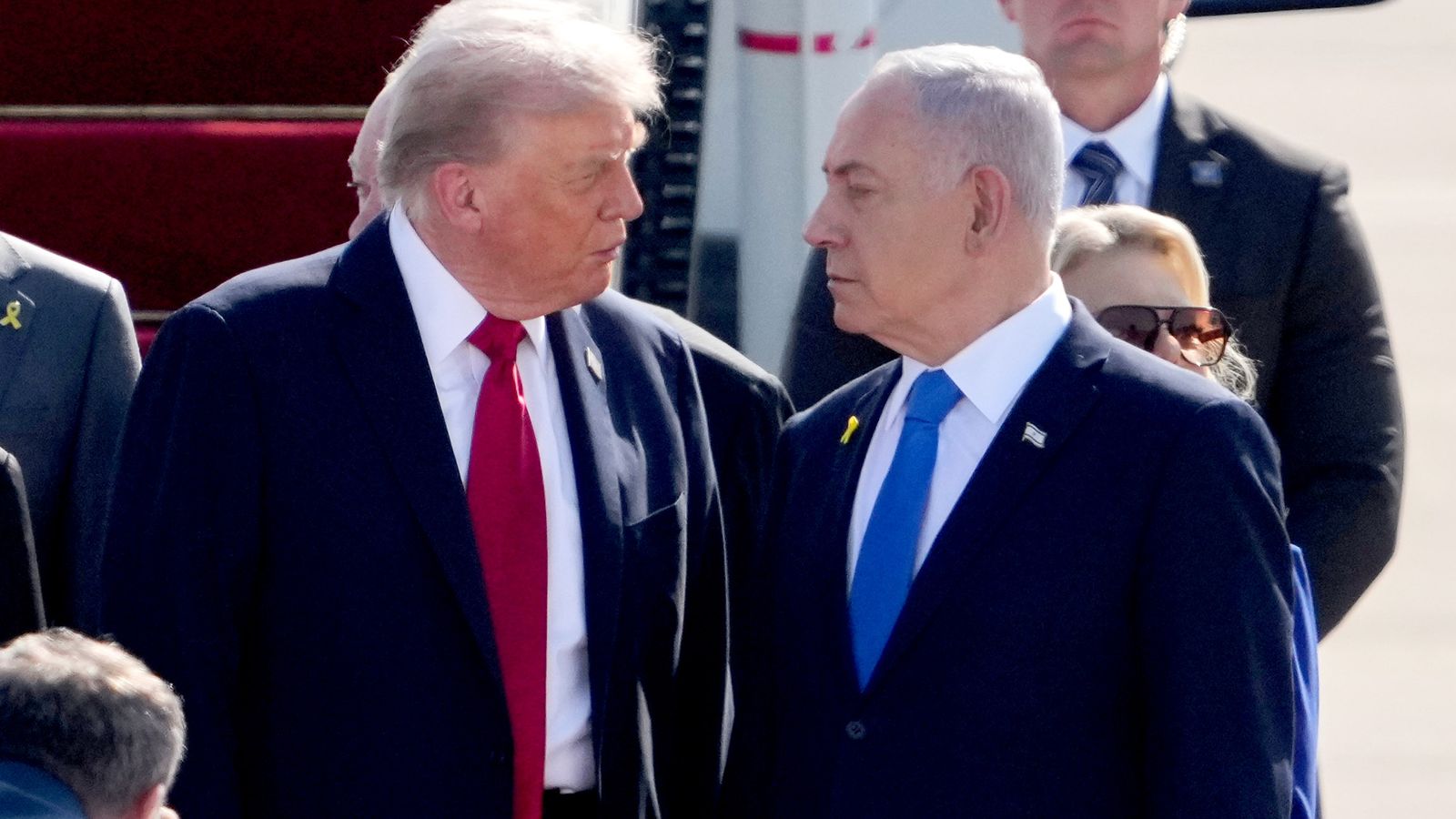
The spy agency had reportedly tracked Ayatollah Khamenei for months, learning his movement patterns, before Saturday’s air strikes
A former CIA agent has revealed how the intelligence agency will be working behind the scenes in Iran, as air strikes continue across the Middle East.
The US and Israel launched a wave of attacks on Iran this weekend which killed Iran’s Supreme Leader, Ayatollah Ali Khamenei.
The US intelligence agency pinpointed a crucial meeting of Iranian leaders and handed the information to the Israeli military, who struck the site on Saturday morning.
Now, the agency may be considering backing an opposition group to take control in Iran, while helping identify remaining targets from the Khamenei regime.
Steven Cash, a former CIA official who held several roles in US intelligence until last year, said that the operation would be tightly controlled by Donald Trump.
“If the CIA is involved, they will – or at least should – adopt whatever strategy the White House directs and approves,” Cash told The i Paper. “I do not think the agency would freelance, and decide the overall strategy.”
The former agent also said that the CIA was likely to be working towards both supporting opposition groups and removing the remaining figures from the Khamenei regime.
“I don’t think ‘regime replacement’ and ‘tentacle cutting’ are two different things. In fact, more likely that tentacle cutting is one of a number of strategies, or a component of strategies for regime change,” Cash said.
Tehran was hit with more strikes on Monday (Photo: Fatemeh Bahrami/Anadolu via Getty)
Kenneth Katzman, a former senior Middle East analyst at the US Congress and a CIA analyst in the 1980s, said this week’s events were the culmination of decades of intelligence-gathering.
The agency has “been working for decades, developing sources, developing tactics, developing methods inside Iran”.
Intelligence officers have been building networks of informants as well as electronic surveillance and satellite monitoring, particularly of nuclear sites and programmes, and Iran’s leaders.
“Iran has been a priority target for years,” he said.
Katzman suggested the CIA would now work with groups on Iran’s borders – like the Kurds – to secure “safe routes” into Iran for any potential ground forces, from CIA paramilitary teams to special forces.
Trump did not rule out sending ground troops in the future “if they were necessary” in a brief telephone interview withthe New York Post on Monday.
A US strike on a vehicle in Iran, in an image shared by the Central Command (Photo: US Centcom/X/Reuters)
Katzman said: “I’m not saying the CIA is going to arm the Kurds in some sort of an insurrection. I’m saying the military is going to need access to Iran from the border areas, and the Kurds are a natural partner in that way”, because they are already armed and established and the US has a large military presence in Iraqi Kurdistan.
Once inside Iran, Katzman said the CIA would be “key” in determining where any ground forces could base safely or set up a drone base, and scouring for Iranian missile bases.
“You need intelligence to figure out where the rest of the missiles are coming to, being launched from or being stored,” he said. “The intelligence role in this is tremendous.”
Tracking and taking out Khamenei
The CIA had reportedly been tracking Khamenei for months, learning the patterns of his movements and locations.
Timings for the attack were moved when the CIA uncovered plans for a meeting of top Iranian officials including Khamenei in Tehran on Saturday morning, according to The New York Times.
There was close intelligence co-operation between the US and Israel in the run up to the attack, and the CIA passed their information on Khamenei’s location to Israel, which carried out the strike.
According to The Wall Street Journal, to accompany the missile strikes, Israeli hackers infiltrated a popular prayer app allowing them to gain access to millions of phones. Israeli officials then transmitted messages calling for the Iranian military to overthrow the regime.
Satellite imagery showing heavy damage at Khamenei’s compound in Tehran, following strikes by the US and Israel on Saturday (Photo: Pleiades Neo/Airbus DS via Reuters)
Khamenei may be dead, but his regime is not. Iran undoubtedly had succession plans in place and quickly declared a temporary leadership to govern.
Former CIA director General David Petraeus said that the Khamenei operation was an “extraordinary intelligence success” but that “we don’t know what will follow”.
Petraeus told BBC News he was “confident” that Iran’s interim leadership was not using mobile phones due to the risk it could lead the US and Israel to them.
Sascha Bruchmann, a research fellow at the International Institute for Strategic Studies, told The i Paper that Iran’s retaliation shows that its leadership has been at least temporarily secured.
“Iran’s leadership was decapitated, but the ongoing Iranian missile and UAV [drone] attacks testify that authorities had been passed down and that major IRGC [Islamic Revolutionary Guard Corps] bases remain loyal,” he said.
With Khamenei gone, the CIA and Mossad may focus on locating the remaining governmental and military leadership, to enable further air strikes aimed at taking down the regime as a whole.
Trump has hinted as much, saying in a video this weekend that combat operations against Iran would continue “until all of our objectives are achieved”.
Backing Iranian opposition groups
The CIA may also attempt to throw its weight behind opposition groups, to try to install a regime deemed more agreeable to the US.
One US intelligence source told The i Paper there had only been “passing thoughts” from the intelligence community on a viable opposition leader at this stage.
Katzman said that the exiled son of the former Shah of Iran, Reza Pahlavi – a dissident who lives in the US – was widely seen as the obvious choice and backed by many opposition groups.
The CIA would probably focus on how to get him back into Iran and build support, rather than identify alternatives for the US to back. However, Trump, during a press talk on Tuesday, played down his chances against someone from within the country.
Reza Pahlavi has been positioning himself as future leader of Iran (Photo: Joel Saget/AFP)
It would not be the first time the intelligence agency was involved in attempted regime change in Iran.
In 1953, the CIA participated in a coup to topple the leftist Iranian government of Mohammad Mosaddegh and give power to the US-friendly Shah. In the run-up, CIA-funded agents were used to build unrest inside Iran through the harassment of religious and political leaders, as well as a media disinformation campaign.
The current Iranian regime has accused foreign intelligence services of being involved in the anti-government protests that swept the country in recent months, before being violently quashed.
“They have trained some people inside and outside the country; they have brought in some terrorists from outside,” President Masoud Pezeshkian, who appears to have survived the latest air strikes, said in January, without providing any evidence.
Iranians mourn the death of their supreme leader following air strikes in Tehran on Saturday. The CIA may struggle to find an alternative Iranian leadership, experts warn (Photo: Kaveh Kazemi/Getty)
Dr HA Hellyer, an expert in Middle East geopolitics and security at the Centre for American Progress, said it appeared the CIA shared crucial information that guided the latest air strikes, playing a “supportive” role in the operation.
However, he said the agency may struggle to find an alternative Iranian leadership to get behind. “I think there’s going to be quite the struggle for CIA elements to find alternative power structures on the ground in some kind of regime-change strategy,” he told The i Paper.
“Clearly there’s lots of dissent [in Iran], but not in terms of consequential divisions of force and power dynamics. The regime still has the dominance over the monopoly of force and arms, through the IRGC and the Basij [paramilitary militia] in particular.”
The CIA’s long history in Iran
Dr Rowena Abdul Razak, a lecturer in Middle East history and an Iran specialist at Soas, University of London, said that the CIA “has a long history of intervention and presence in Iran and the Middle East” dating back to the Second World War, when Iran was occupied by allied forces.
Iran was an “early Cold War battleground” and the CIA began to “monitor Iranian affairs closely. They provided detailed reports of the left, in particular the Tudeh Party, especially due to Iran’s close proximity to the Soviet Union”, she told The i Paper.
“Sending in CIA operatives into the country, Washington gathered useful intel, made local alliances and successfully organised a coup that toppled the Mosaddegh government” in 1953, Razak said.
Air strikes in Tehran (Photo: Mahsa/Middle East Images/AFP)
Meanwhile, Muhammad Reza Shah, who ruled Iran until he was overthrown in 1979, relied on the CIA as well as Mossad to train his secret security force, Razak said.
Since the 1979 Islamic revolution, which toppled the Shah, the CIA and Mossad have continued to be active. “Both CIA and Mossad are known to have operatives within the country, usually Iranians, and it is them who provide intel as well as logistical support.”
“Over the years, Mossad has conducted several assassinations within Iran against nuclear scientists and military personnel,” she added.
Razak also said it was “not surprising” that the agencies were involved in the killing of Khamenei, given their long-standing involvement in affairs in Iran.